Faders Up, Egos Down: The Unseen Hands Behind Oxford's Wildest Nights
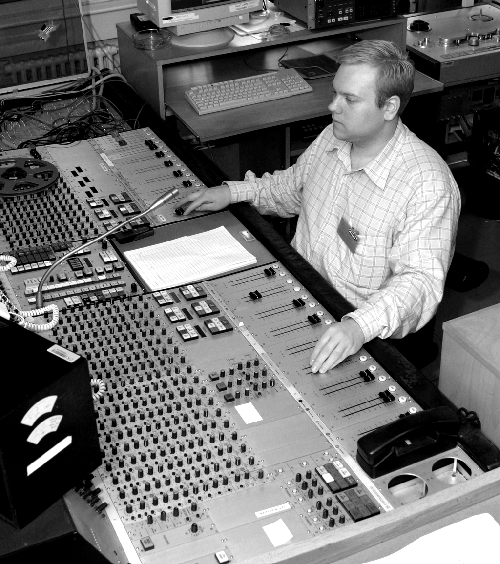
Photo: Unknown, CC BY-SA 3.0, via Wikimedia Commons
Nobody photographs the sound desk. Nobody puts the engineer's name on the flyer. And yet, ask anyone who's played a proper venue in Oxford and they'll tell you the same thing: the person behind that little hut in the corner can make or break your night.
We spent three weeks buying pints for the men and women who sit in the dark while everyone else stands in the light. What follows is what they told us — some names withheld, because some of these stories involve touring acts who shall remain anonymous and a certain Oxford indie band who once played an entire set in mono.
The Fresher's Week Massacre
Every September, the same ritual. Eighteen-year-olds arrive with amps their mums bought them and a monitor engineer's patience of a saint.
"You can spot the freshers' week gig immediately," says one engineer with over a decade at the desk in this city. "The singer asks for 'more vocals in the monitors' and then screams into the mic at a distance of about four inches. You dial it up, they back off, and suddenly you're feeding back at 12kHz while the entire front row loses its hearing."
His advice? "Learn to hold the mic properly. That's it. That's the whole lesson. Ninety per cent of a bad mix is a bad performer three feet from the desk."
The Night the Desk Died
Not every horror story involves people. Some involve equipment — and the creative solutions that follow.
One tech recalls a sold-out gig at a venue he'd rather not name where the main PA's left channel gave up halfway through the headline set. "We ran the whole thing through one side, panned centre, and honestly? Nobody noticed. Or if they did, they thought it was a vibe. That's the trick of this job — half of mixing is making disasters sound intentional."
Another story involves a touring act — big enough to have a rider, small enough to still be playing 300-cap rooms — whose guitarist insisted his amp was 'the sound of the band'. The amp died during soundcheck. The engineer handed him a modelling pedal and a DI box. "He played the best show of the tour. Never forgave me for it."
The Unsung Diplomats
It turns out the job is less about frequencies and more about conflict resolution. The sound engineer is the referee between drummer and vocalist, the therapist for nervous openers, and occasionally the person who tells a band that yes, their set does need to finish by eleven, no matter what their manager says.
"You learn to read a room before a note is played," one veteran told us. "You can tell within thirty seconds of a band walking in whether it'll be easy or whether you're earning your money tonight. The good ones ask questions. The difficult ones ask for 'more everything'."
Why They Keep Doing It
So why do it? Long hours, sticky floors, minimal thanks. Every engineer we spoke to gave roughly the same answer, in different words: the moment it clicks.
"There's a point in every good gig — usually the third or fourth song — where the room and the mix and the band all line up," one said. "You're not doing anything anymore. You're just holding it there. That's the job. Everything else is just getting to that moment."
Next time you're at a gig in Oxford and the mix sounds flawless, wander past the desk. Give them a nod. They'll be quietly stunned. Nobody ever does.
And if the mix sounds rough? Be kind. Chances are the singer just asked for more vocals in the monitors.