One Song Wonders: The Merch Stand Economics of the Streaming Era
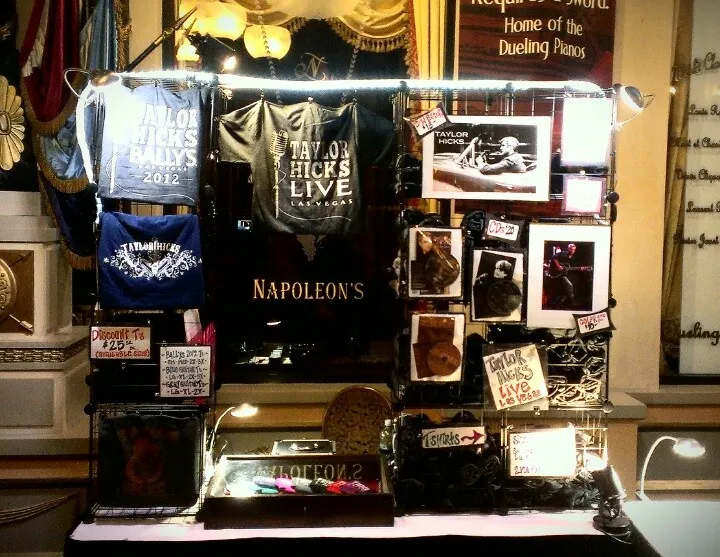
Photo: band merchandise table vinyl records t-shirts at small gig venue, via i.pinimg.com
There's a moment every Oxford gig-goer has witnessed, probably without clocking it. The band finishes the song — the one, the viral one, the one with forty million streams and a TikTok sound attached to it — and there's a beat. Then a ripple. Then a slow, polite exodus towards the bar, the cloakroom, the door.
The band still has six songs left.
Welcome to the 45-second shuffle: the modern gig-goer's habit of sampling a track on Spotify, deciding within half a minute whether it's for them, and carrying that exact behaviour into the venue. If the intro doesn't grab, they're scrolling. If the famous song ends, they're leaving. Oxford's small stages are having to adapt fast.
The Setlist Is Now a Sales Funnel
"We used to build a setlist like a story," says the frontwoman of a Cowley Road four-piece who asked not to be named — her band's booker discouraged it. "Now we build it like a funnel. You open strong, you hit the known song by track four, because people won't wait. Track five is where you lose the tourists."
That's not cynicism. It's arithmetic. Venue bookers across town describe the same pattern: crowds that swell for the single and thin out either side of it. One Jericho booker told us she now checks a band's streaming figures before agreeing a fee — not out of snobbery, but because "if they've got one song with half a million plays, I know I need to staff up for a room that'll be half-empty twenty minutes in."
Merch Stands Feel It First
If you want to read the health of a gig, look at the t-shirt table. And by that measure, things are odd.
"It used to be that people who stayed bought stuff," says a long-time merch seller who works the circuit between Oxford, Reading and Bristol. "Now you'll sell out of the vinyl of the single to people who arrived during the soundcheck and left before the encore. Meanwhile the album — the thing with the actual songs on it — sits there. People will spend £25 on a record of a song they've heard, and nothing on one they haven't."
The 45-second shuffle has trained a generation to treat music like a feed. Skip is free, attention is scarce, and the merch stand is where that friction shows up in pounds and pence.
Not All Doom
Here's the twist, though: some Oxford acts are thriving on it. The bands doing best aren't the ones fighting streaming — they're the ones treating every gig as a conversion funnel of their own.
"One in fifty of them might come back," as one guitarist put it. "That's fifty people who'd never have heard of us otherwise. You play the hit, you play your best three after it, and you make the t-shirts good. That's the whole game."
Several local acts now deliberately place their strongest deep cut immediately after the viral track — a bet that the people still standing are the ones worth keeping. Others have started ending on the single rather than saving it, accepting the walkouts and treating the rest of the set as a private show for the faithful.
What It Means for the Rooms
For Oxford's venues — the basements, the back rooms, the above-pub spaces that have hosted every touring act worth seeing since the nineties — the calculus is shifting. Bookers want bands with a story, not just a sound. Nights built around curation, where the whole bill pulls in the same crowd, are quietly outperforming the traditional three-band-and-out format.
And there's a case that the 45-second shuffle is a filter, not a plague. The people who stay past the single are, by definition, the ones who care. Smaller crowds, maybe — but denser ones. More committed ones. The kind who buy the album and come back in March.
The shuffle isn't going anywhere. But Oxford's stages have always been good at making something out of very little. A room of thirty true believers is a better night than a room of two hundred waiting for one song — it's just taken the streaming era to remind us why.