Seven Quid for a Pint: The Quiet Maths Deciding Who Goes Out in Oxford
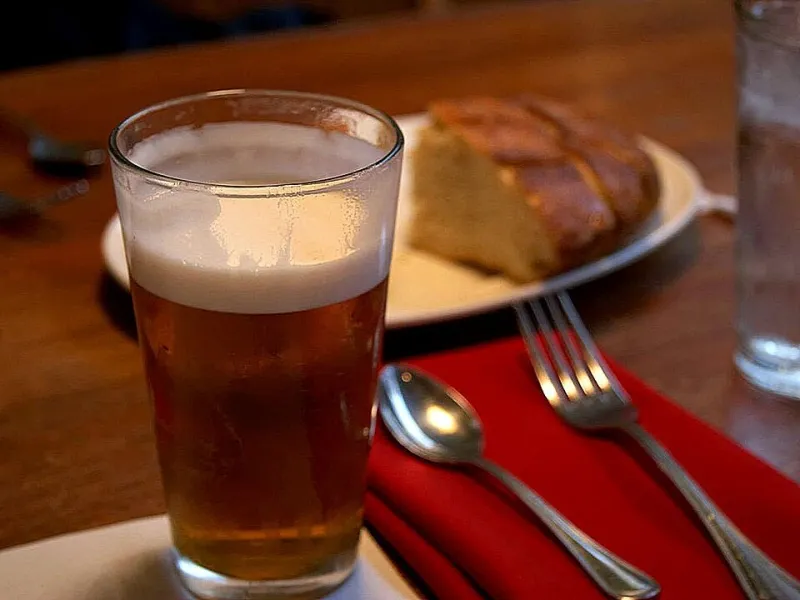
Photo: Jon Sullivan, Public domain, via Wikimedia Commons
There's a moment that happens on Cowley Road most weekends. A group of students huddles at a bar, someone squints at the chalkboard, and then the whisper travels down the line: shall we just have one each?
It didn't used to be like this. Ask anyone who's been going out in Oxford for a decade and they'll tell you about the £4 pint — not with nostalgia exactly, but with the tone of someone describing a bus route that no longer exists. That pint is gone. In several city-centre venues it's been replaced by something north of £7, and once you add the service charge, the optional shot and the inevitable round bought out of guilt, a modest night out clears £40 before you've even found the dancefloor.
So what's actually happening behind the bar — and who's being priced off the guest list?
The Economics Nobody Wants to Explain
Talk to venue owners and you get the same defensive patter: energy bills, business rates, the collapse of the wholesale drinks market post-Brexit. A lot of it is true. One venue manager on the Cowley Road strip, who asked not to be named because "we still need to work with the breweries", walked me through it.
"A keg of decent lager has gone up thirty-odd percent in two years. Rent hasn't moved down. Staff want — deserve — a real wage. If I sell you a pint for £4.50 I'm basically lending you money." He shrugs. "So the menu says £6.80 and everyone hates me."
It's a fair point, and it's worth saying plainly: most Oxford venues are not gouging anyone. They're surviving. But survival economics have a strange side effect — the price of a drink stops being a price and starts being a filter.
The Halls Workaround
Spend any time around the student population and you'll spot the pattern immediately. Pre-drinking isn't a warm-up anymore; for a lot of people it's the main event. Supermarket own-brand spirits, a six-pack in a kitchen on Iffley Road, a Spotify playlist and someone's flatmate on a Bluetooth speaker — then out at eleven, cash-strapped, to nurse one drink or, increasingly, none.
"I budget £15 for a night out," says Priya, a second-year at Brookes. "That's the taxi home, one drink, and a bit of buffer. If my friends want to do a 'proper night' — sit in a pub all evening — I just say I'm busy. It's easier than saying I can't afford it."
That last line is the one that lingers. There's a quiet embarrassment to being priced out, so people don't say it. They just stop coming. And the room slowly changes without anyone announcing it.
The One-Drink Night and the Sober Drift
Bar staff see the shift from the other side of the tap. "Five years ago, a table of four would run four rounds," a bar manager in town told me. "Now it's two drinks each, maybe a third if it's someone's birthday. We make the same money off more bodies, which is why everywhere is rammed but nowhere is flush."
The interesting knock-on effect is cultural rather than financial. Sober and sober-adjacent nights have stopped being a novelty. Alcohol-free lagers that don't taste like regret, low-ABV options on proper menus, even the odd sober rave — some of it is wellness culture, sure, but a lot of it is just people recalibrating to a world where the drink is the most expensive part of the evening. If the pint costs more than the gig ticket, the calculus flips.
Is a Night Out Becoming a Luxury?
Here's the uncomfortable question the whole city is circling. Oxford has always had a split personality — the dreaming spires and the estate, the tourists and the locals. Drink pricing is drawing that divide through the middle of the night out itself.
Students from comfortable backgrounds absorb a £7.50 round without thinking. Working locals on actual Oxford wages, the people who keep this city's venues alive on a random Tuesday, increasingly can't. One regular at a Jericho pub put it bluntly: "The pub's full of people who don't live here, drinking prices people who do live here can't pay. How long does that work?"
There's no villain in this story, which is what makes it hard. Venues are squeezed. Suppliers are squeezed. Drinkers are squeezed. But the aggregate effect is real: fewer drinks sold, shorter nights, a crowd that skews towards whoever's got the deepest pockets — and a city where going out for the sake of going out quietly becomes something you plan for, like a holiday.
What Might Actually Help
Nobody's expecting the £4 pint to come back. But there are small, practical things worth shouting about. Happy hours that actually feel like a gesture rather than a marketing gimmick. Venues that price a decent alcohol-free option properly instead of charging £6 for a can of fizzy water. Gig tickets that include a drink. And honestly — a bit of honesty. When a bar manager explains why the pint costs what it costs, people grumble less and stay longer.
Because the alternative is a city where the lights stay on but the rooms empty out. Oxford's nightlife has survived curfews, licensing battles and the pandemic. It'd be a bitter irony if what finally hollowed it out was something as mundane as the price list.