The Other Side of the Rope: Oxford's Door Staff Tell It Like It Is
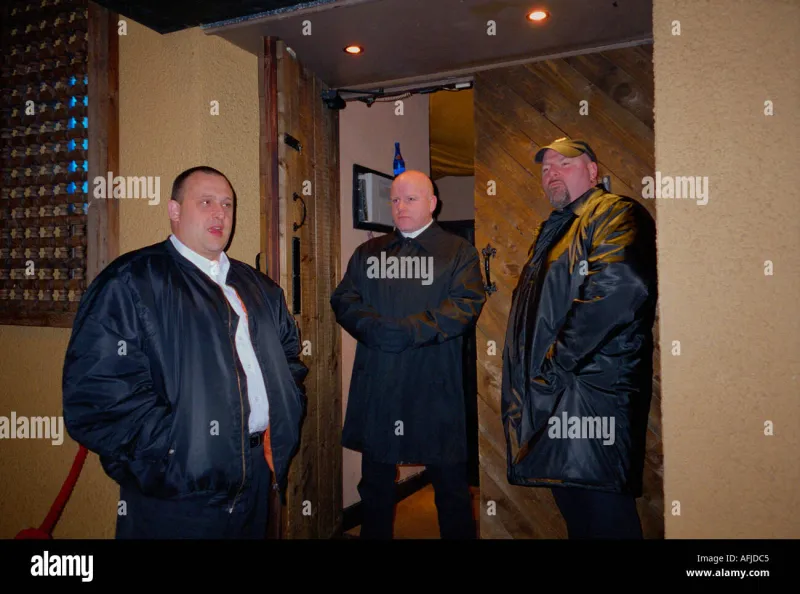
Photo: nightclub door supervisor bouncer crowd queue night UK, via c8.alamy.com
There's a moment, usually around 11:40pm on a Saturday, when the Cowley Road queue stops being a queue and becomes a weather system. Everyone's had a drink. Nobody's had enough. And standing between the two is a bloke in a black jacket who has already made forty decisions in the last ten minutes.
We wanted to know what that feels like. So we asked. Over several weeks, Red Star Oxford spoke to a handful of veteran door supervisors working the city's busiest venues — the big student nights, the dive bars, the club on George Street that shall remain nameless for legal reasons. What follows is the night out from the other side of the rope.
The First Hour Is a Lie
"People think the trouble happens at closing time," one supervisor with over a decade on Oxford doors told us. "It doesn't. Trouble starts at half eleven, when the pre-drinks land. Everyone's in a good mood, everyone's had four vodkas, everyone's a bit invincible. That's when I'm watching."
The skill, they all agree, isn't spotting aggression. It's spotting the thirty seconds before aggression — the group that's gone quiet, the lad walking on his heels, the mate who's stopped laughing at the joke. By the time someone's squared up, the work has already failed.
It's a long way from the cartoon image of the bouncer as a slab of muscle with a clipboard. The modern door supervisor is SIA-licensed, conflict-trained and, more often than you'd think, a psychology graduate working their way through a master's. Several of the people we spoke to were also musicians. One runs an open mic night on Tuesdays. The door and the stage are closer cousins than either admits.
Freshers, Ranked by Difficulty
Ask any door supervisor in this city about October and watch their eyes go somewhere distant.
"Freshers are the easiest and the hardest crowd simultaneously," one veteran explained. "Easiest because they're terrified of us. Hardest because they've never been told no by a door before. You get kids from St Aldate's trying to negotiate entry like it's a UCAS appeal. 'But I know the promoter.' Mate, the promoter doesn't know his own phone number right now."
The classic freshers' offences, lovingly catalogued: the fake ID that says the holder was born in 1989 but is clearly fourteen; the group of eight where one has lost the entire group's tickets; the student who arrives at midnight for a 10pm headliner and is genuinely outraged the set has started. And the single most universal experience — the tearful third-year who got separated from their friends in the smoking area and has now formed an emotional attachment to the door staff.
"You end up being a lost property office, a counsellor and a taxi rank," one told us. "Sometimes all in the same hour."
They Remember Every Band That Ever Slipped In
Here's the part nobody expects: door staff are often the first people in Oxford to notice the next big thing. Not on stage — in the queue.
"You learn faces," one supervisor said. "Years ago there was this scruffy lot who'd play the tiny room, load their own gear in through the fire exit, then stand at the back of someone else's gig watching the support act. That's how you spot the serious ones. Famous people watch. Tourists perform."
They wouldn't name names — discretion is the entire job — but the stories stack up: the Mercury-nominated artist who got refused entry to their own afterparty because the guest list had a typo; the arena headliner who queued patiently like everyone else and tipped the cloakroom; the singer, now enormous, who used to ask the door staff for honest opinions on the set.
"Best review I ever gave a band was 'you were less bad than the queue,'" one laughed. "They put it on a poster."
The 2am Diplomacy
Every veteran we spoke to had a story about defusing a fight without a single hand laid on anyone. The techniques are less martial arts, more international relations: separate, distract, give someone a face-saving exit. One described talking two would-be combatants into splitting a donor kebab as a "peace treaty". Another swears by the simple phrase "not in front of her, mate," which he describes as "the most powerful sentence in the English language."
"Ninety per cent of this job is letting people keep their dignity," he said. "The ten per cent is when they won't take it."
And when the lights come up? The image that stayed with us most was the quiet one: door staff shepherding the last stragglers towards taxis, walking the nervous freshers to the bus stop on St Clement's, holding the door for the cleaner arriving as everyone else spills out.
What They Wish You Knew
We asked each of them for one message to Oxford's night crowd. The answers were remarkably consistent.
Be nice to the person scanning tickets — they've been standing there since seven. Don't take a door refusal personally; it's usually about the last fifty people, not you. And if someone at the door tells you a venue is going to be the best night of your life, believe them. They've seen enough of them to know.
Next time you're in the queue on Cowley Road, half-cut, trying to convince a stranger in black that yes, of course that's your real ID — spare a thought for the person on the other side. They've seen your night out a thousand times.
They're just waiting to see if you'll be one of the good ones.