Doors Are at Eight. The Day Started at Four: Shadowing the Crew Who Build Oxford's Gigs From Nothing
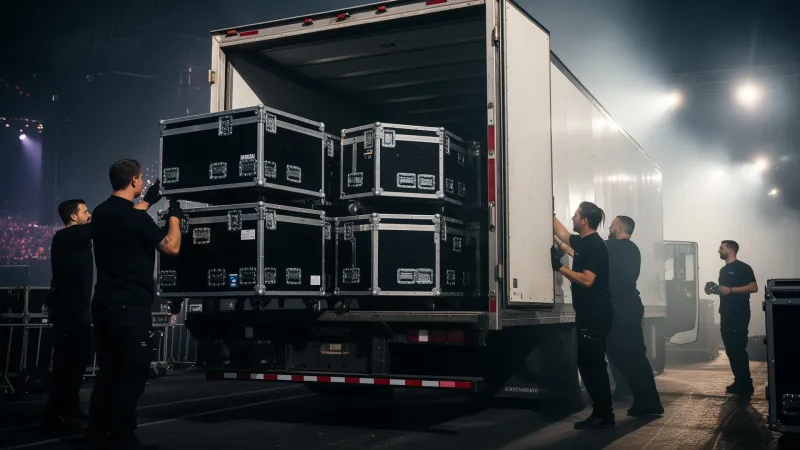
Photo: band crew loading flight cases into small music venue backstage, via encorelogistix.com
The van arrives at 4:07pm, which the driver insists is early. By any reasonable standard he is correct; by load-in standards, he's four minutes behind schedule and everyone knows it. The shutter rattles up on a side street off Cowley Road, and for the next hour or so, the venue — a black-painted box that doubles as a bar, a club and occasionally a poetry night — becomes a loading bay.
This is the part of the gig you never see. Not the soundcheck, not the support act, not the queue round the corner. The bit where eleven people you will never meet carry somebody's entire livelihood through a fire exit, one flight case at a time.
The Maths of a Load-In
There's a loose rule on the crew: whatever the headliner's rider says, add twenty minutes and a sense of humour. Tonight's touring band — four lads and a pedal steel player, in from Manchester on the second date of a run that ends in Southampton on Sunday — have brought more cable than seems legal.
"Every venue's different, so you bring for the worst room and hope for the best one," says Dez, the band's backline tech, as he coils a snake of XLR leads the thickness of a python. "This place has got a low ceiling and a concrete floor, which means the drums are going to sound like a bin lid until we get the gates right."
He's not complaining. This is affection, of a sort. Oxford's mid-size rooms — the ones that hold somewhere between 150 and 400 — are famously idiosyncratic. Pillars where you don't want pillars. A bar that sits directly in front of the desk. One legendary basement off George Street where the low end behaves like it holds a personal grudge against everyone present.
The crew wouldn't have it any other way. As one of tonight's local engineers puts it, while hauling a monitor wedge up the stairs: "Big rooms are easy. They're designed. This lot are designed by whoever owned the building in 1973."
Four O'Clock Is the Real Door Time
The choreography, once you notice it, is genuinely impressive. First the backline — drums, amps, the pedal steel's absurd flight case, which requires two people and a brief negotiation with a doorframe. Then the PA hangs, or rather doesn't, because the venue's system is already flown and has been since roughly the Blair era. Then the desk gets wheeled into position, patched, and switched on with the reverent hush of someone booting up a spaceship.
By 5:30pm the stage exists. An hour ago it was a bare platform under strip lights. Now it's a stage — riser in place, backline lined up, gaff tape holding down the world. The transformation happens in increments so small that if you left for a cup of tea, you'd miss the whole miracle.
And here's the thing: this happens tonight in Oxford four, five, maybe six times over. There's a load-in happening at the big room on the Cowley Road. Another at the pub venue off the High Street. A third at the student union, where the local indie quartet are soundchecking to an empty room and a security guard eating a meal deal. Multiply that by every night of term, and you get a picture of how much invisible labour keeps this city's gig calendar breathing.
The Soundcheck Nobody Claps For
Line check at 6:45pm. The engineer — let's call him Sam, because that's his name — sits at the desk with a can of Red Bull and the serenity of a man who has done this two thousand times. Drummer first. Then bass. Then the long, patient process of getting the guitarists to stop noodling long enough to play something useful.
"The band always want to run songs," Sam says. "The engineer always wants to ring out the monitors. You've got about forty minutes and both of those things cannot fully happen. Someone compromises, and it's usually the band."
He's right. The monitor wedge for the pedal steel player develops a hum. Ten minutes of detective work — it's a dimmer circuit, it's always a dimmer circuit — and the problem dies. Nobody in the audience tonight will ever know it existed. That's the job, really: manufacturing the absence of problems.
Merch Table Economics, 101
Downstairs, the band's merch person — a mate from Manchester called Katie who joined the tour for "the banter and the petrol money" — is setting up her t-shirts on a fold-out table with the precision of a market trader. She's done the sums already: tonight she needs to shift eight tees for the tour to break even on this leg.
"People think the money's in tickets," she says. "The money's in a hoodie sold at half eleven to someone who's had four pints. God bless them, every one."
Then You Arrive
By 7:50pm the room is transformed. Lights rigged, doors unlocked, a queue of coats and student IDs shuffling towards the wristband table. The crew retreat to whatever passes for a green room — tonight it's a corner of the bar and a plate of chips someone ordered an hour ago.
In four hours, this room went from an empty box to a gig. Nobody will mention it. Nobody needs to. But next time the lights drop and the first chord lands clean, spare a thought for the hi-vis vests, the python of cable, and the dimmer circuit that almost ruined everything.
Doors at eight. The day started at four.