Choir Stalls and 808s: Oxford's Old Halls Are Learning to Rave
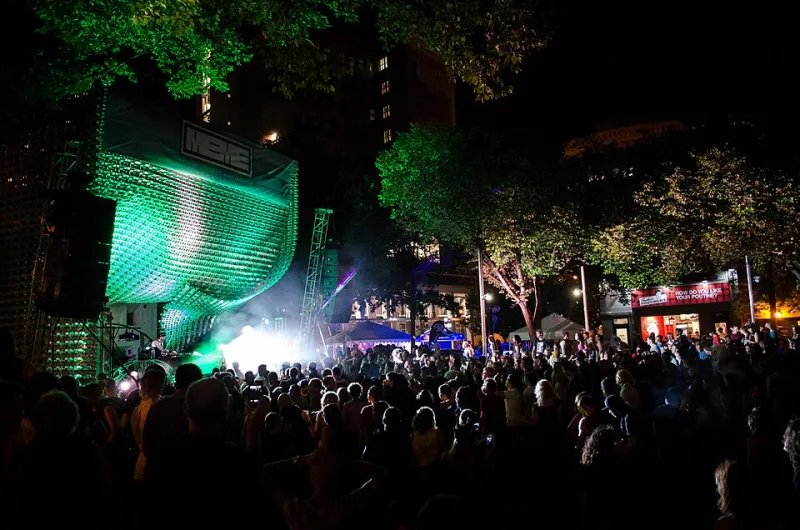
Photo: Ccyyrree, CC0, via Wikimedia Commons
There's a moment, usually around the third track of the warm-up set, when a promoter standing in one of Oxford's centuries-old venues does the maths. The ceiling alone predates the printing press. The acoustics were designed for choral evensong. And in roughly forty minutes, this room is going to contain 300 people and a bass bin that would make the original architects faint.
It's happening more and more. The city's grandest spaces — the Sheldonian, college chapels, dining halls with portraits of people who'd absolutely disapprove — are quietly being added to the late-night circuit, hosting everything from ambient listening sessions to full-throttle electronic takeovers.
Why Bother With a Building That Has No Bar?
Simple: nowhere else sounds like this. Cowley Road's rooms are beloved and scruffy, but they can't compete with a fan-vaulted ceiling that turns a reverb tail into a religious experience. Producers have noticed too — several touring acts now specifically request the historic rooms when routing through Oxford.
"The first time I heard a kick drum in that space, I actually got emotional," admits one promoter who's spent two years coaxing electronic programming into venues that usually host recitals. "You can't manufacture that. You can't build a room like that anymore. Nobody's got the budget or the craftsmen."
The Fight With the Limiter Is Real
Of course, the romance of a chapel rave meets reality pretty quickly, and reality usually arrives in the form of a very patient sound engineer holding a decibel meter and a very firm expression.
These buildings weren't just built for quiet — they're often surrounded by things that object to noise. Colleges, residential streets, the sheer weight of listed-building paperwork. Every night is a negotiation: sub levels carefully tuned, curfews honoured to the minute, and sound systems chosen as much for control as for punch.
"People think we're being precious," says an engineer who's worked more of these nights than most. "We're being surgical. You get maybe a ten-decibel window between 'that sounds incredible in here' and 'the warden's on the phone.' The good promoters understand that and work with it. The bad ones learn."
The result is a specific kind of club night — one where dynamics matter, where the drop hits harder precisely because the room's been coaxed into it rather than bludgeoned. Think of it as mixing with the headroom of history.
Convincing the Gatekeepers
The bigger battle isn't acoustic — it's institutional. Bookers, bursars, committees who meet in daylight and view the word "club night" with the enthusiasm usually reserved for damp. The winning pitch, promoters say, is always the same: respect.
"We lead with what we're protecting, not what we're doing," one organiser explains. "No drones, no rigging to the stonework, no glowsticks in the organ pipes. We clean up like we were never there. Once they see the room treated properly, they come round. Some of them even come to the nights now — you'll spot a don in the corner having a wonderful time."
That's the quiet revolution here: heritage and nightlife aren't natural enemies, they're just bad at communicating. The venues need younger audiences to stay relevant and solvent. The city's ravers need somewhere magical. Everyone wins — provided nobody spills a pint on anything load-bearing.
Your Guide to Going Grand
If you've only ever danced on Cowley Road, the historic circuit deserves a night of your calendar. A few tips from the veterans:
Dress for the temperature. Stone walls hold cold the way they hold sound. Layers are not a fashion choice.
Respect the room. These nights attract a crowd that came for the music and the space. Phone filming gets you looks that could curdle communion wine.
Arrive early. The support sets in these rooms are often the best part — a warm-up in a cathedral of acoustics is a genuinely different experience.
Check the licensing. These events run under special permissions and sell out accordingly. Don't roll up at midnight expecting the door to be soft.
The old halls have survived plague, fire, war and six centuries of students. A club night doesn't scare them. And if the past couple of years have proven anything, it's that Oxford sounds best — loudly, after dark — when the whole city's architecture joins the party.