Too Big for the Room: Inside Oxford's Enduring Habit of Making World-Famous Bands
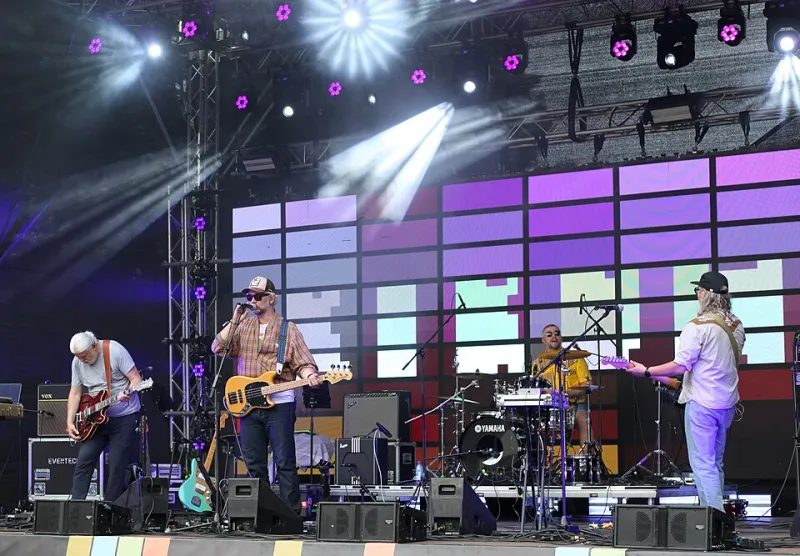
Photo: Sillerkiil, CC0, via Wikimedia Commons
There's a peculiar Oxford tradition: a band forms in a room the size of someone's garage, plays a handful of sticky-floored venues around Cowley Road, and then — apparently inevitably — ends up headlining festivals. Radiohead did it. Supergrass did it. Foals did it. Stornoway did it. A city of roughly 150,000 people keeps exporting bands that fill arenas, and nobody here seems all that surprised.
So what exactly is 'the Oxford sound'? And more importantly — can it happen again?
The Myth of the Oxford Sound
Ask five people and you'll get five answers. Some point to the twitchy, angular guitar music of Foals and their math-rock cousins. Others reach back to the widescreen melancholy of OK Computer, recorded largely in the Oxfordshire countryside. Supergrass brought the pop; Ride brought the shoegaze.
The honest answer is that there isn't one sound — there's a set of conditions.
Why Here? The Conditions for a Breakout
Spend any time in the local scene and the same factors keep coming up.
First, the universities. Oxford has a constant churn of 30,000-plus students, which means a perpetual supply of people with instruments, spare evenings, and a burning need to be part of something. Every September, the scene resets and refreshes.
Second, geography. London is an hour away — close enough for A&R scouts to jump on a train, far enough that bands develop in peace before the industry comes sniffing. Oxford acts historically got to be good before they got to be famous.
Third, and perhaps most importantly, the venues. Small rooms like the Wheatsheaf, the Library and the Bullingdon have spent decades giving young bands somewhere to fail safely. You can't learn to be a great live act without rooms that let you be terrible first.
Can It Happen Again?
Talk to the people running tonight's scene and you'll find cautious optimism, tempered by hard economics.
Promoters point out that the fundamentals haven't changed — the talent is still there, in bedrooms and rehearsal rooms across the city. What's changed is the ladder. Streaming means a band can be heard globally before they've ever played live, which is both a shortcut and a problem: Oxford's traditional strength was as a live incubator, and that pipeline needs protecting.
Venue owners are blunter. Rising rents, licensing costs and shifting student spending habits mean small venues are operating on margins thin enough to see through. Every closure of an independent room somewhere in the UK is felt here as a warning.
Which is why spaces like Red Star matter. The venues that survive will be the ones embedded in their community — putting on local bills alongside touring acts, running open decks and open mics, treating new artists as an investment rather than a gamble. Nurturing the next breakout act isn't romantic charity; it's the only sustainable model. Today's support slot is tomorrow's headline act, and everyone in this city knows it because they've watched it happen.
The Artists Writing the Next Chapter
Ask current Oxford artists whether the city still has that magic and the answer is a resounding yes — with caveats. The collaborative spirit is intact; bands still share gear, bills and flat surfaces to sleep on. What's harder is visibility in an algorithm-driven world, and the cost of simply existing as a young musician in an expensive city.
But the pattern is stubborn. Somewhere in Oxford right now, a band is playing to forty people above a pub, and in five years those forty people will be telling anyone who'll listen that they were there.
That's the Oxford story, told on repeat for four decades. The spires don't make the music. The rooms do — and as long as they stay open, the city will keep making bands too big for them.
Know a local act we should be shouting about? Drop us a line — Red Star Oxford exists to amplify this city's sound.