Tin, Sweat and F Sharp: Seven Days on Magdalen Street with Oxford's Buskers
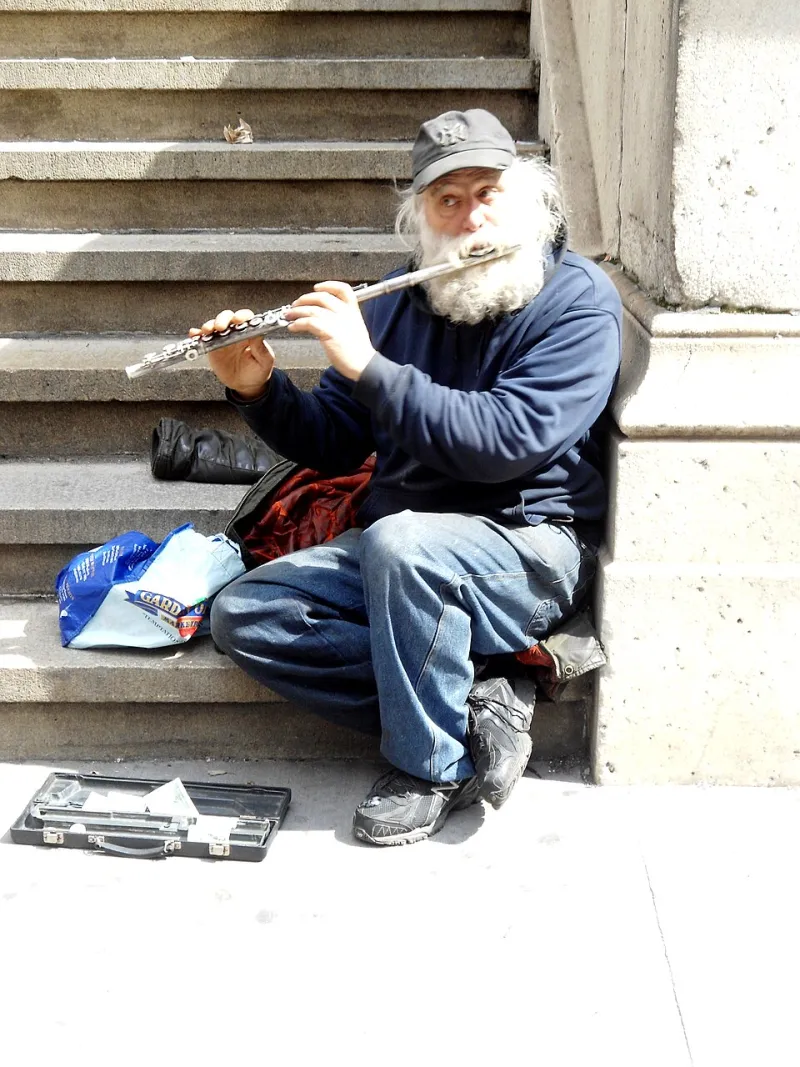
Photo: YasirQazi, CC BY-SA 4.0, via Wikimedia Commons
There's a spot on Magdalen Street, roughly equidistant between the bus stop and the bridge, where the acoustics are accidentally perfect. The stone walls either side act as a natural reverb chamber, the footfall never stops, and if you position yourself just right, the sound carries all the way down to the junction with Broad Street.
Three musicians know this better than anyone. We followed them for a full week — every set, every pitch, every handful of coppers — and what we found was a working economy hiding in plain sight, played to thousands of people who almost never stop walking.
The Pitch War
Oxford operates a light-touch busking scheme: no licence required for standard acoustic performance, but there are designated spots, two-hour limits, and an expectation you'll move along if a nearby shop complains. On paper, it's civilised. In practice, the good pitches are fought over like the last bag of Kettle Chips at a house party.
"There's a hierarchy," explains Dee, a singer-guitarist who's worked the city centre for four years. "The bridge spot is prime. New Square's decent on Saturdays. Cornmarket looks busy but the wind kills your sound and the shoppers are all in a mood."
By 9:45am on a Monday, Dee has already claimed her pitch with a guitar case and a flask of coffee — an unspoken reservation system that everyone respects and nobody admits exists.
Counting the Copper
Here's the number nobody puts on a poster: across five full days, our three buskers averaged £11.40 an hour. On a blazing Saturday afternoon, the best of them pulled £34 in a single hour. On a rainy Tuesday in February? £3.80, mostly in five-pence pieces that weigh more than they're worth.
"People think you're raking it in," says Tomás, a classical guitarist who trained at the university and chose the street over the conservatoire circuit. "I once made £90 in two hours outside Blackwell's during graduation week. I've also done four-hour sets for the price of a meal deal."
The maths gets harsher fast. Factor in strings, travel, a broken D-string on day two (£4.50, ouch), and the council's guidance to keep noise reasonable, and busking starts to look less like a side hustle and more like a vocation with a monthly loss column.
The Set List Science
There's a strategy to what gets played, and it's ruthlessly empirical. Wonderwall is a trap — too much of a cliché, attracts the wrong kind of heckling. Fleetwood Mac's 'Dreams' reliably stops people mid-stride. Anything from a film soundtrack, especially something like 'Somewhere Only We Know', performs absurdly well with the tourist crowd.
"You're a jukebox with a tipping bucket," Dee laughs. "But there's a craft to it. You read the street. Wedding parties coming out of the Town Hall? Bangers. Tourists photographing the bridge? Something gentle and English. Lads on a stag do? God help you."
Playing to Nobody
The strangest part of the week is the invisibility. On Wednesday we timed it: over an hour, roughly 1,400 people passed Tomás's pitch. Four stopped. Two tipped.
"You learn to perform for the one person who's listening," he says. "Usually a kid, or someone having a genuinely awful day. You can tell. That's who it's for."
It's a strange inversion of every gig we cover on this site. No door staff, no soundcheck, no rider. Just a musician, a pitch, and the ambient roar of a city that's heard it all before.
Why It Matters
Here's our pitch, so to speak: the buskers of Magdalen Street are the first live music most people in Oxford encounter in a given week. They're a free gig, a training ground, and — for a few of them — a genuine stepping stone. One of our three has just been offered a support slot at a Jericho tavern off the back of a street set. The scene that fills the Cellar and the Bullingdon doesn't materialise from nowhere. Some of it starts with a guitar case open on wet cobbles.
So next time you're crossing the bridge with your headphones in, do the maths with us. Thirty seconds of listening. A quid if you've got it. The average hourly rate says they've earned it.
Red Star Oxford followed three buskers with their consent across one week in spring. All musicians quoted spoke freely and were paid for their time — unlike their sets.